The global talent landscape has hit a historic turning point in 2026. While overall hiring difficulty has slightly eased to 72% (down from 74% in 2025), the nature of the shortage has fundamentally shifted. For the first time, AI and Machine Learning capabilities have surpassed traditional engineering as the most difficult skills to find globally.
The competition is no longer just about who can code; it’s about who can orchestrate. At Talentus Global, we see that companies winning the talent war are those moving away from "buying" talent toward a strategy of "Building and Synchronizing."
1. The New Skills Hierarchy
Traditional IT and Data skills have dropped to 7th place in scarcity. In their place, a new "Big Three" has emerged as the baseline for 2026 competitiveness:
AI Model & Application Development: The ability to build and scale proprietary agentic systems.
AI Literacy & Human-AI Interaction: Ensuring the entire workforce knows how to work alongside autonomous agents.
Cybersecurity & Compliance: As AI scales, so do the threats. DevSecOps is now a non-negotiable requirement for every hire.
2. The Shift from "Degrees" to "Verified Skills"
In 2026, a four-year degree is no longer the "golden ticket." With technology evolving faster than academic curricula, 65% of employers now use objective skills-based assessments rather than resume screening.
The Strategy: Remove degree mandates for mid-to-high level roles. Focus your interviews on Critical Thinking and Problem Solving, skills that 73% of TA leaders say are more important than knowing a specific AI prompt.
How to Compete: Use a Smart Sourcing marketplace like Talentus, where technical leads are already pre-vetted for 2026's most in-demand stacks, allowing you to bypass the "resume black hole."
3. Solving the "Pipeline Crisis" with Internal Upskilling
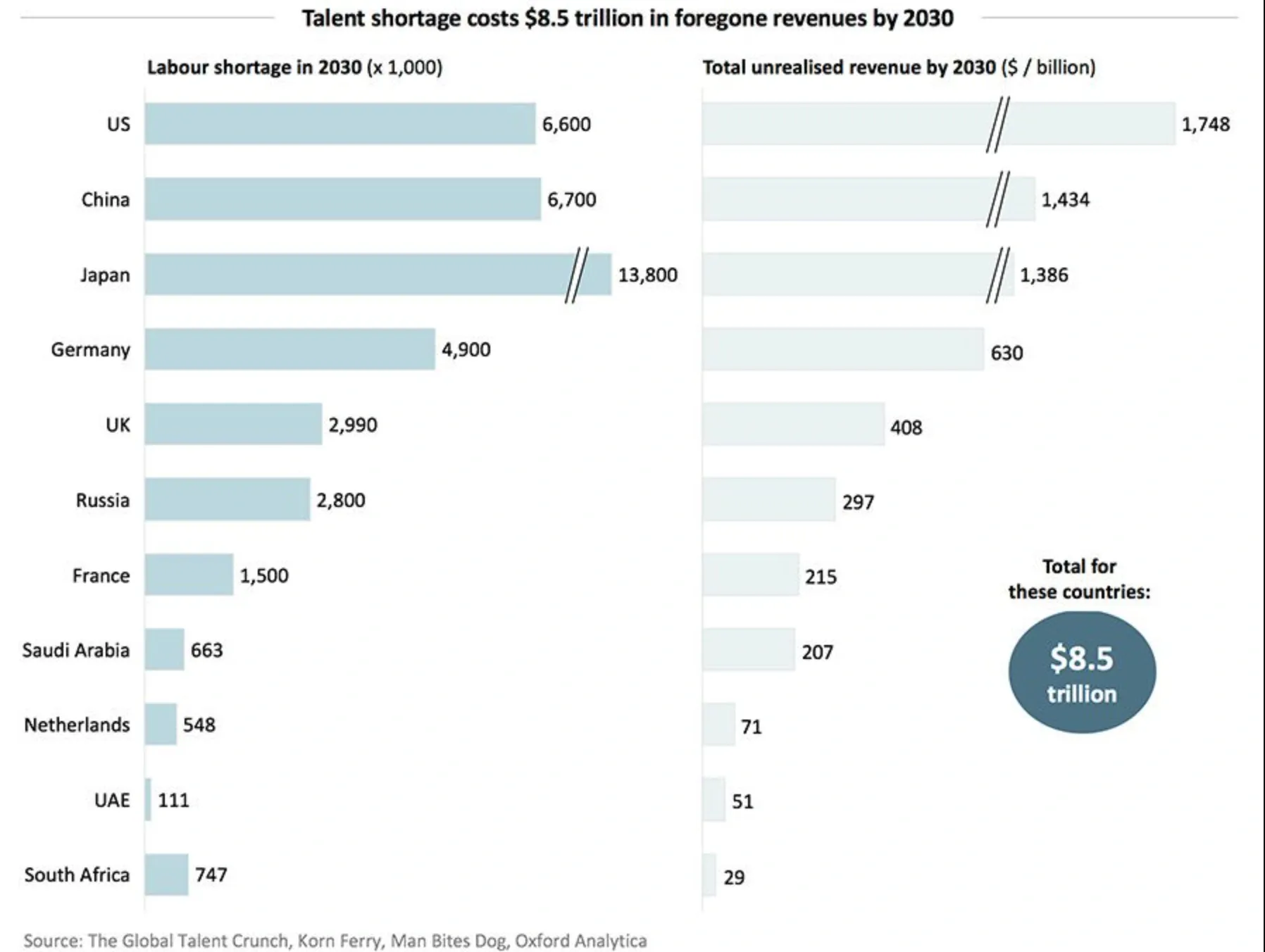
Entry-level roles are disappearing, 61% of organizations have already automated them. This creates a massive problem: where will your future senior leaders come from?
The Prediction: Companies that only hire seniors will face a "Sustainability Tax" as salaries for those roles skyrocket.
The Strategy: Invest in Reskilling. 83% of HR leaders now believe business success depends more on upskilling current employees than hiring new ones. Transform your "Mid-career" staff into AI-augmented powerhouses.
4. Nearshore Synchronization as a Competitive Moat
As teams become leaner and more impact-driven, the cost of "Asynchronous Lag" (waiting 12 hours for a response from an offshore team) has become a deal-breaker.
The Advantage: Companies staying ahead are centralizing their distributed teams in Latin American Nearshore hubs. This ensures real-time collaboration, shared culture, and the speed necessary to keep up with AI-driven release cycles.
Conclusion: Talent Strategy is Digital Strategy
In 2026, you cannot separate your technology roadmap from your people strategy. The talent shortage isn't a lack of people; it’s a lack of alignment. By prioritizing skills-based hiring, internal upskilling, and nearshore synchronization, you turn the shortage into your greatest competitive advantage.
Is your talent pipeline ready for the Q4 push?
Find your next AI-native lead or synchronized engineering pod in 48 hours at the Talentus Marketplace.