Colleges and universities manage millions of square feet of physical infrastructure, from historic lecture halls to modern research laboratories.
Yet, facilities operations remain one of the largest unoptimized expenditures in higher education. Deferred maintenance backlogs grow, energy is wasted heating empty buildings, and capital allocation decisions are frequently made using outdated manual surveys.
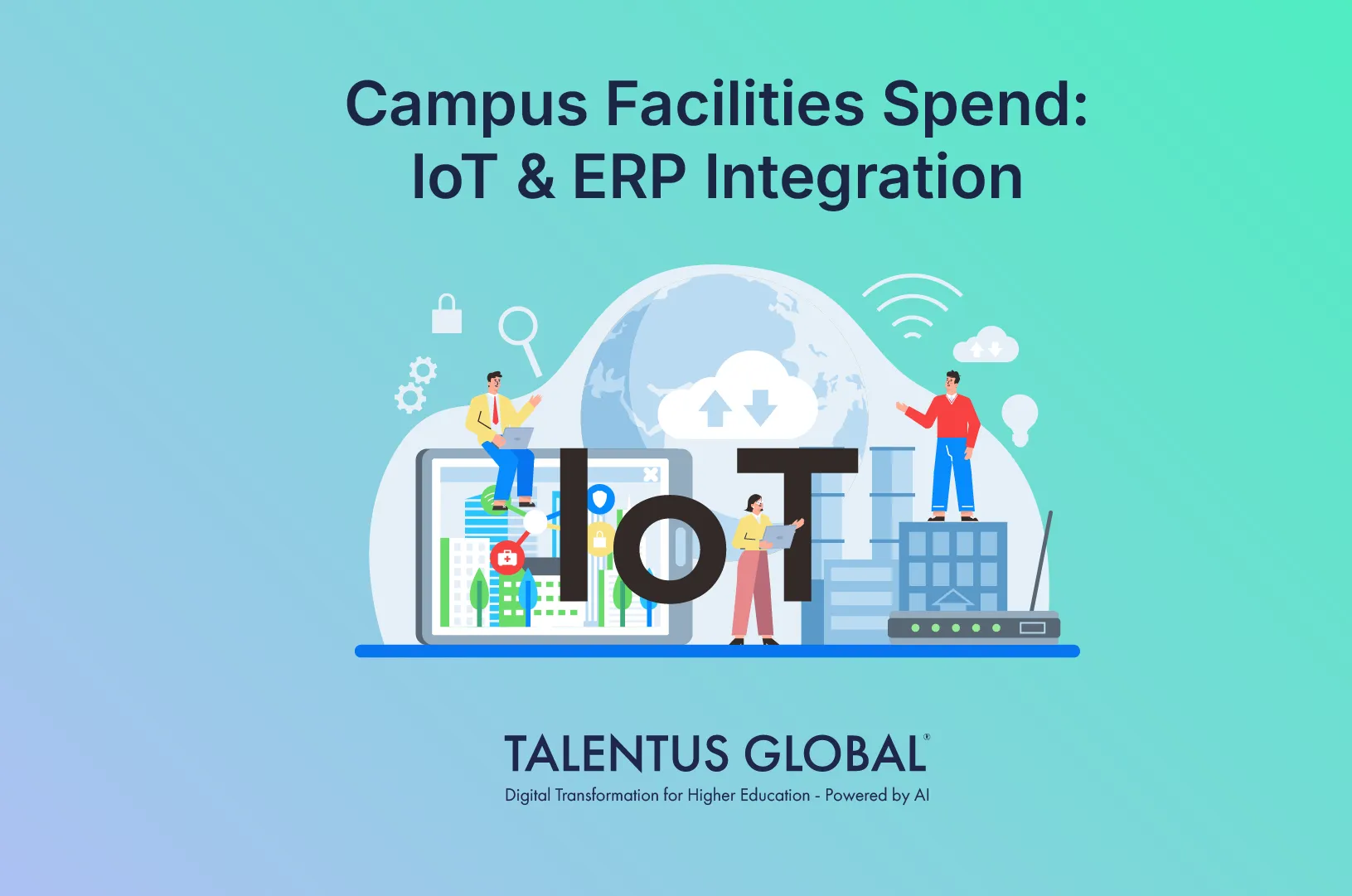
The root cause isn't a lack of data, it's data isolation. Modern campuses deploy thousands of IoT sensors tracking occupancy, HVAC performance, lighting, and ambient temperature. However, this telemetry rarely connects to central enterprise resource planning (ERP) platforms.
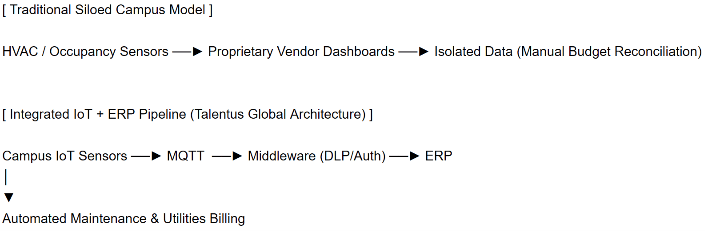
Bridging the gap between physical campus IoT telemetry and enterprise financial workflows transforms facilities management from a reactive cost center into an automated, predictive operational model.
The High Cost of Disconnected Campus Facilities Data
Treating facilities telemetry and financial workflows as separate domains introduces operational friction that inflates university overhead:
- Emergency Repair Premiums: Without predictive maintenance alerts, equipment failure is addressed only after a complete breakdown, costing up to 4 times more than proactive servicing.
- Energy Waste in Vacant Spaces: Heating, ventilation, and air conditioning (HVAC) systems often run on rigid, static schedules rather than responding to real-time occupancy data from classroom management systems.
- Inaccurate Capital Expenditure Planning: Capital renewal budgets are frequently allocated based on fixed schedules rather than actual asset wear and usage intensity.
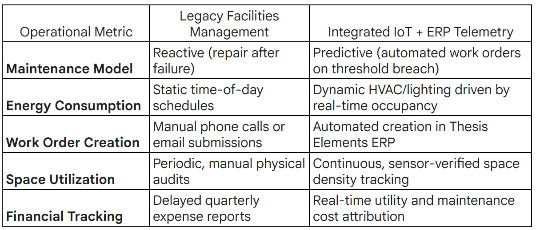
Legacy Facilities Management vs. Integrated IoT-ERP Telemetry
Connecting IoT event streams directly to core university financial and operational modules changes how campus physical assets are managed:
3 Pillars of Enterprise IoT-ERP Integration
Building a high-throughput integration architecture between physical campus sensors and enterprise university software relies on three operational pillars:
1. Unified Event Streaming & Edge Ingestion
Deploy high-throughput event buses (such as Apache Kafka or AWS IoT Core) to aggregate telemetry from disparate sensor vendors via lightweight protocols (MQTT/WebSockets). Normalize raw sensor payloads before routing them into central middleware.
2. Automated Triggering of Financial & Maintenance Workflows
Map physical telemetry triggers directly to business logic. For instance, when a chiller unit's vibration or temperature exceeds safe operational thresholds, the integration middleware automatically logs a prioritized work order, reserves inventory parts, and tags the associated department budget.
3. Dynamic Space Utilization & Scheduling Synchronization
Combine occupancy sensor data with academic scheduling tools. Automatically adjust building management systems (BMS) based on real-time room density, turning off climate control in empty auditoriums and redirecting energy resources where students are actually gathered.
Modernize Your Campus Infrastructure with Talentus Global
Integrating complex IoT sensor networks with core higher ed ERPs requires senior cloud architects, embedded systems specialists, and enterprise integration engineers.
Talentus Global provides dedicated nearshore LATAM software engineering pods to build, scale, and secure your university data pipelines.
For over 30 years, Talentus Global has been a trusted technical partner in enterprise software engineering, cloud architecture, and higher ed digital transformation. Our nearshore LATAM engineering teams specialize in full-stack integration, IoT data streaming, API middleware, and enterprise platform modernization.
Operating 100% synchronously in your US timezone (EST/CST), our pre-vetted LATAM engineering pods deploy in as little as 48 hours to accelerate your campus technology roadmap.
- 100% US Timezone Alignment: Collaborate synchronously with senior engineers during standard EST/CST working hours.
- Deploy in 48 Hours: Bypass domestic recruiting delays and launch specialized engineering pods immediately.
- 95% Developer Retention Rate: Retain institutional technical knowledge and codebase stability across multi-year modernization efforts.
Eliminate facilities waste and automate your campus workflows. Partner with Talentus Global today.