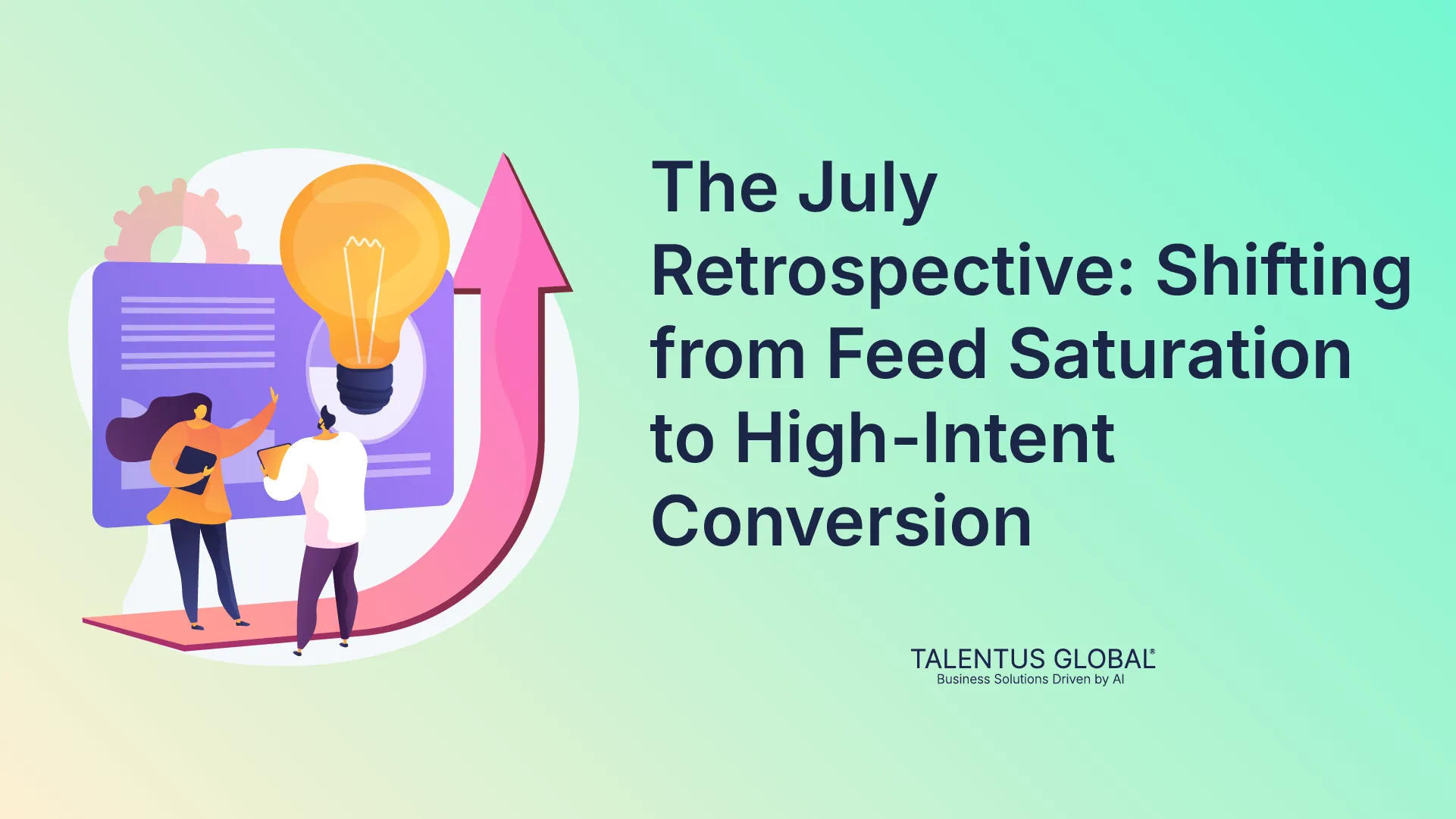
As marketing teams pull their mid-year performance reports, a familiar pattern often emerges in the July retrospective: high impression numbers, expanding reach, and active social feeds, but flatlining pipeline growth.
Over the first half of the year, many B2B organizations and higher education institutions fall into the feed saturation trap. They spend heavily on top-of-funnel broad targeting across LinkedIn, Meta, and display networks to build brand awareness. But in an increasingly crowded digital landscape, high ad frequency and vanity impressions do not automatically translate into qualified sales opportunities or matriculated students.
If your July metrics show strong top-of-funnel reach but stagnant bottom-of-funnel conversion rates, it is time for a strategic pivot. Moving into the second half of the year, growth requires shifting focus from feed saturation to high-intent conversion optimization.
Mid-Year Strategic Shift
Feed Saturation (H1) ──► Broad Audience ──► High Impressions ──► Low Intent / Flat Pipeline
High-Intent Pivot (H2) ──► Intent Data ──► Targeted Touchpoints ──► Qualified Conversion
The Anatomy of the Feed Saturation Trap
Broad-reach campaigns feel productive because they generate immediate visual metrics: likes, clicks, and video views. However, optimizing for mass exposure often dilutes campaign messaging, burning through media budgets while reaching audiences who have zero buying intent.
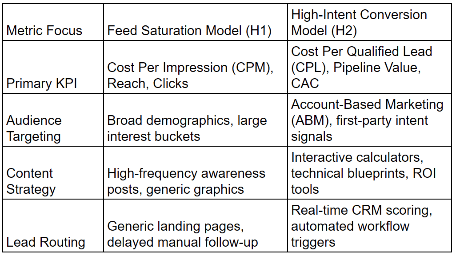
To capture buyers who are actually in-market, campaigns must transition from passive feed exposure to active problem-solving.
The 3-Step H2 High-Intent Framework
Transitioning your marketing strategy for the remainder of the year requires aligning ad targeting, content assets, and backend automation around high-intent behavior.
1. Leverage First-Party and Behavioral Intent Signals
Instead of broad demographic parameters, refine audience segments in LinkedIn Campaign Manager using first-party CRM data, account lists, and third-party intent triggers. Target decision-makers who are actively researching specific pain points, such as cloud migrations, system integration bottlenecks, or software modernization.
2. Replace Static Lead Gen with High-Value Interactive Assets
Traditional PDF whitepapers suffer from low completion rates. High-intent conversion relies on interactive, high-value tools that solve an immediate problem for the prospect:
- Tech debt calculators that quantify legacy system maintenance costs.
- System readiness assessments that evaluate infrastructure maturity.
- Interactive integration blueprints that allow users to map out software workflows.
3. Eliminate Friction in the Conversion Path
Capturing high-intent demand requires seamless infrastructure behind the ad click. If a prospect fills out an evaluation form, your CRM must score, route, and initiate follow-up instantly. Disconnected marketing automation platforms (like HubSpot) and legacy databases create data drops that destroy conversion velocity.
- Build High-Converting Tech & Marketing Infrastructure with Talentus Global
Scaling a high-intent marketing and lead-generation engine requires seamless coordination between digital strategy and technical architecture. If your marketing automation tools, CRM platforms, and custom landing infrastructure are siloed, high-intent prospects slip through the cracks.
Talentus Global bridges the gap between software engineering and modern growth infrastructure.
Through our pre-vetted nearshore LATAM engineering pods, we help organizations build the API-first data connections, real-time analytics dashboards, and custom web applications required to convert high-intent traffic into measurable revenue. Operating synchronously in your US timezone (EST/CST), our teams integrate directly into your sprint cycles to eliminate tech debt and deploy robust integration architectures.
Whether you need pre-engineered EdTech Connectors to sync your CRM with legacy databases or customized analytics layers to track full-funnel conversion rates, Talentus Global provides the architectural bandwidth to power your H2 growth.
Stop paying for empty impressions. Build a high-intent conversion engine with Talentus Global today.