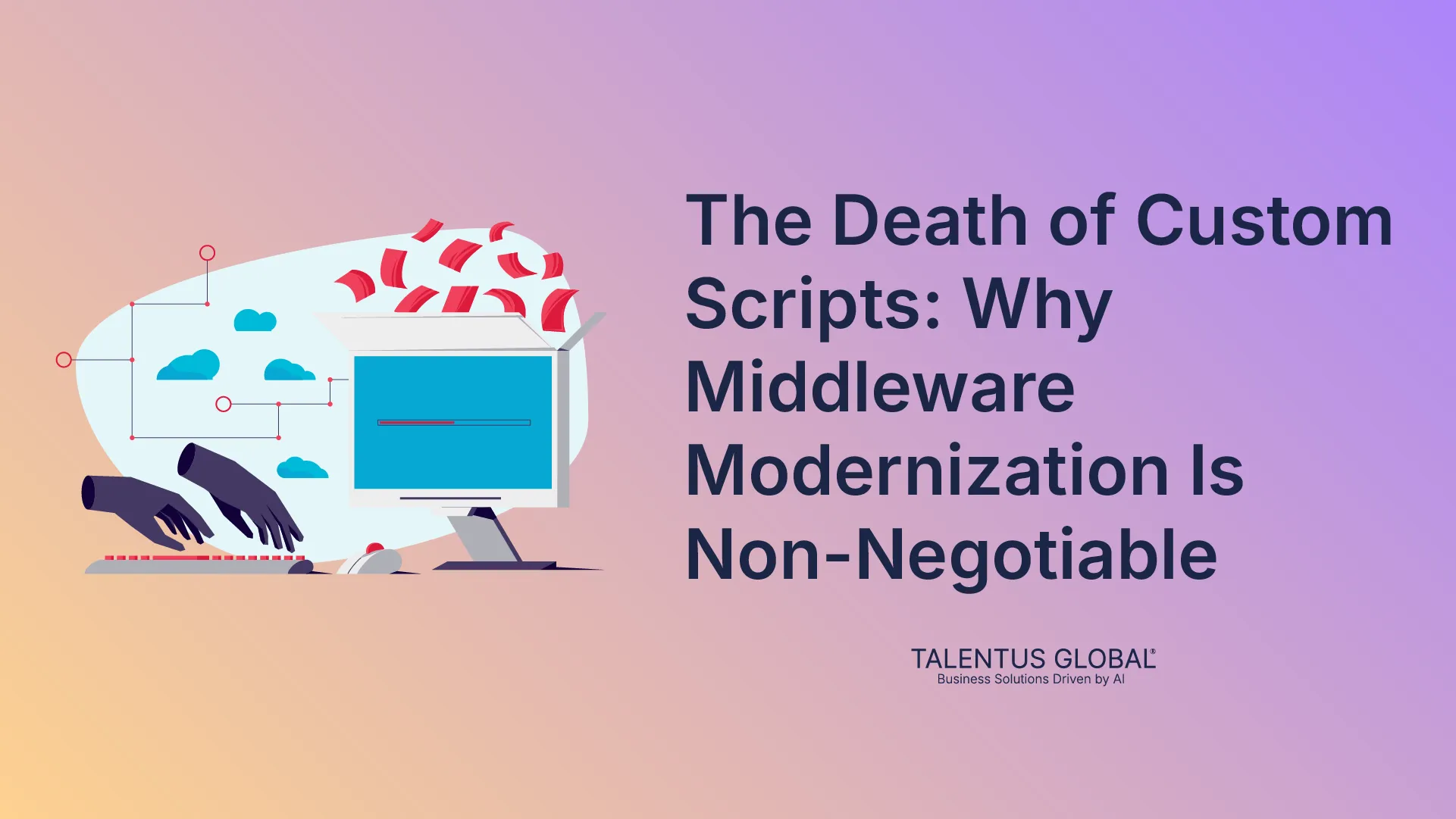
Ask any veteran IT director or CTO to show you their enterprise architecture diagram, and you will usually see a clean, polished layout of core systems: CRM, ERP, SIS, and analytics databases. Ask them what actually connects those systems, however, and the clean diagram dissolves into a maze of custom Python scripts, legacy Cron jobs, direct SQL triggers, and unmaintained point-to-point API adapters.
For decades, custom scripting was the default quick fix for data integration. When the admissions department needed applicant files pushed to the registrar, a developer wrote a 200-line script to run at midnight. When finance needed tuition records synced with the ERP, another developer wrote a custom web hook.
Today, that approach is a ticking clock. As enterprise software ecosystems become more dynamic, with rapid cloud API updates, strict data privacy mandates, and real-time operational demands, custom scripts are failing at an alarming rate.
The era of point-to-point custom scripting is dead. To build a resilient digital infrastructure, modern organizations must prioritize middleware modernization.
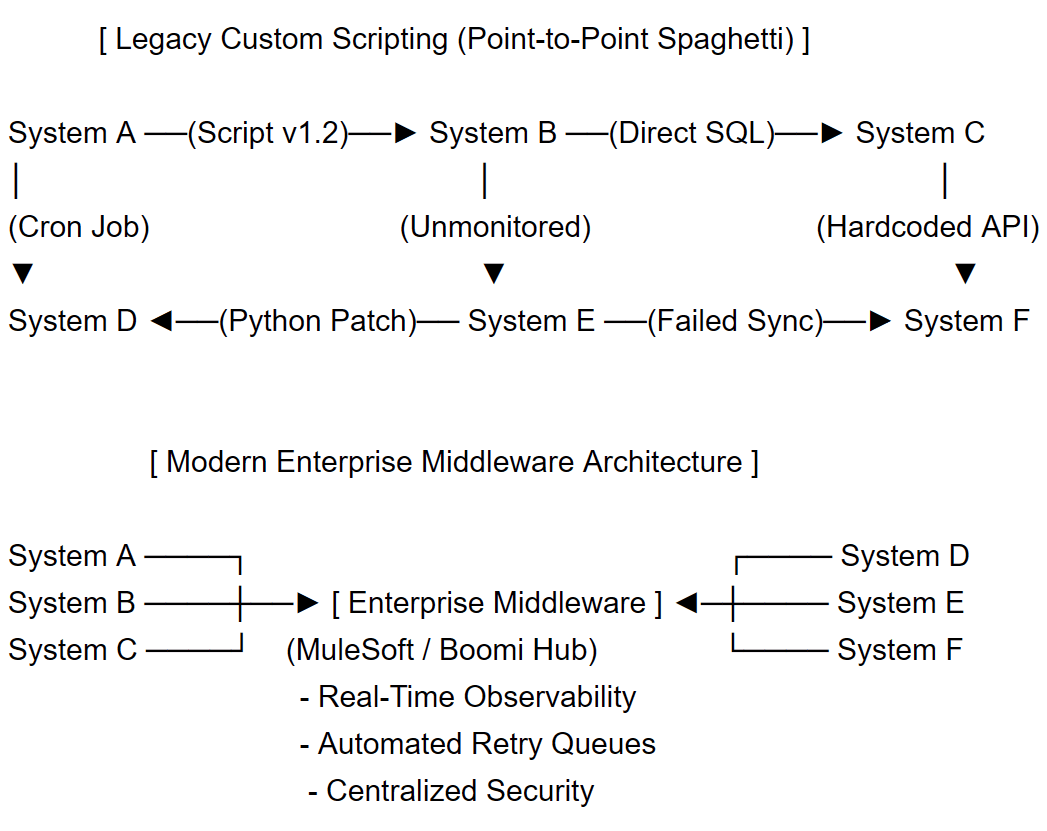
The Invisible Tax of Point-to-Point Custom Scripts
Custom integration scripts feel inexpensive when they are first written. The true cost surfaces years later when system updates occur, security audits take place, or key personnel leave the organization.
The hidden costs of custom integration scripts generally fall into three categories:
- The Single-Developer Knowledge Trap: Custom scripts are rarely documented to enterprise standards. When the engineer who wrote a mission-critical script leaves the team, that script becomes an unmodifiable black box. IT teams become terrified to update surrounding systems for fear of breaking hidden legacy code.
- Zero Observability and Silent Failures: When a Cron job or custom script crashes due to a timeout or schema shift, it rarely alerts the team gracefully. Failures are often discovered days or weeks later, usually by end users noticing corrupted data or missing customer records.
- API Version Churn: Modern SaaS platforms like Salesforce, Canvas, HubSpot, and Workday update their API endpoints frequently. A custom script hardcoded to an older API version will break the moment the vendor deprecates that endpoint, triggering emergency engineering fire drills.
Custom Scripts vs. Enterprise Middleware Platforms
Modern enterprise middleware, such as MuleSoft, Dell Boomi, or custom-engineered API hubs, replaces fragile point-to-point logic with a centralized, governed, and scalable integration layer.
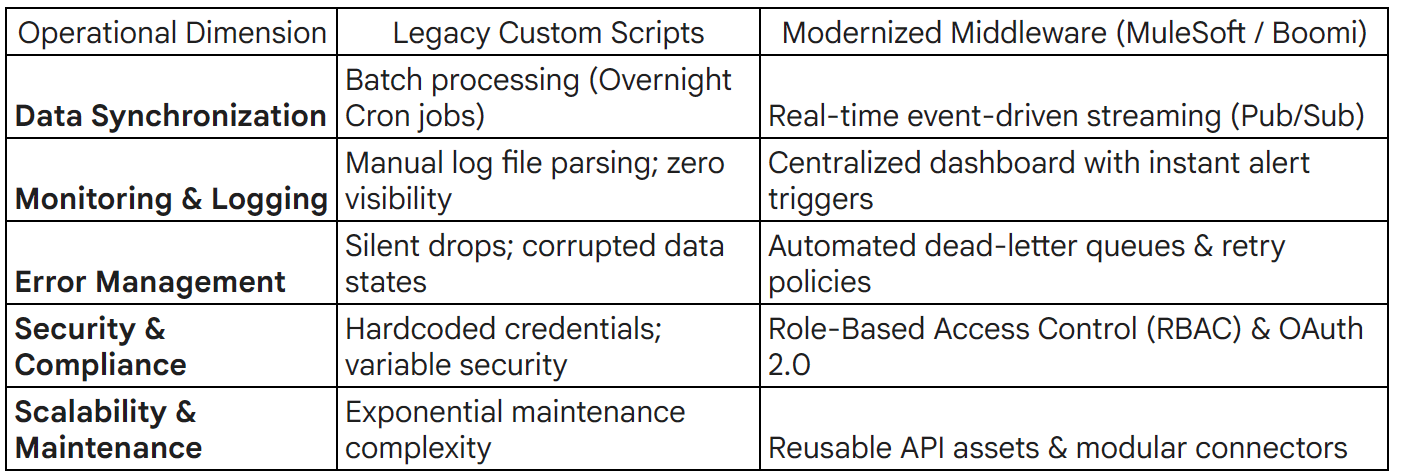
The Middleware Solution: Reusable API-First Architectures
Modernizing your integration architecture does not mean throwing away your existing core systems. Instead, enterprise middleware sits between your applications to act as a universal translator and traffic controller.
Adopting an enterprise middleware platform provides three immediate architectural advantages:
- API Reusability: Rather than writing unique integration logic for every system pair, middleware exposes standardized API endpoints. Once an ERP or SIS connector is built in MuleSoft or Boomi, any current or future application can securely access that data.
- Event-Driven Agility: Instead of waiting for overnight batch transfers, middleware utilizes event triggers. When a customer or student updates their profile in a mobile app, that change streams instantly across every connected CRM, billing, and support platform.
- Automated Error Recovery: If a destination system goes offline for maintenance, modern middleware holds incoming data payloads in secure, encrypted queues and retries delivery automatically once the system restores, guaranteeing zero data loss.
Accelerate Middleware Modernization with Talentus Global
Migrating from a web of legacy custom scripts to a modern middleware platform requires specialized integration architecture expertise. Many internal IT teams want to modernize, but lack the bandwidth or specific certifications in platforms like MuleSoft, Boomi, or cloud-native API management.
Talentus Global supplies the engineering capacity to eliminate integration tech debt.
With a 30-year legacy in enterprise digital transformation, we deploy dedicated, pre-vetted nearshore software engineering pods specialized in middleware modernization, microservices architecture, and DevSecOps.
- LATAM Nearshore Pods: Deploy specialized integration developers in days, eliminating domestic 60-day hiring friction.
- 100% Timezone Synchronization: Our engineering teams operate synchronously in your exact US hours (EST/CST) for real-time daily standups and seamless repository integration.
- Long-Term Engineering Continuity: Maintain institutional memory throughout your modernization roadmap with our industry-leading 95% retention rate.
Stop letting legacy custom scripts dictate your operational agility. Modernize your enterprise middleware with Talentus Global today by following this link