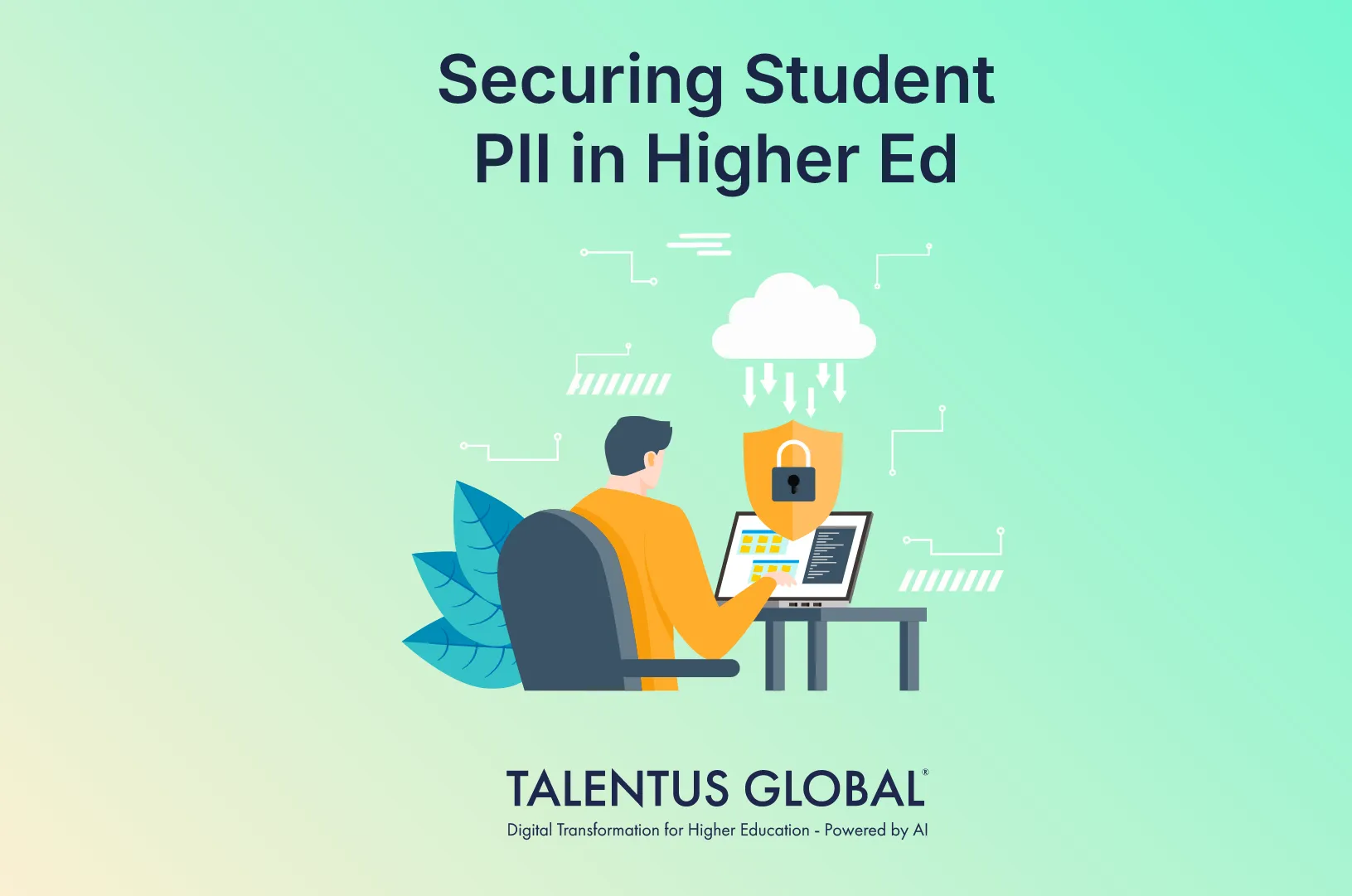
Higher education institutions have become prime targets for sophisticated cyber threats.
From Social Security numbers and financial aid applications to health records and academic transcripts, universities store vast reserves of Personally Identifiable Information (PII). As campus IT departments accelerate cloud migration, connecting legacy databases with cloud Student Information Systems, donor platforms, and alumni CRMs, the attack surface expands exponentially across hybrid workflows.
When student data flows between on-premises servers, third-party SaaS vendors, and remote learning environments without unified encryption and access controls, compliance gaps widen. A single unencrypted endpoint or misconfigured API endpoint can lead to devastating data breaches, regulatory penalties under FERPA, and severe reputational damage.
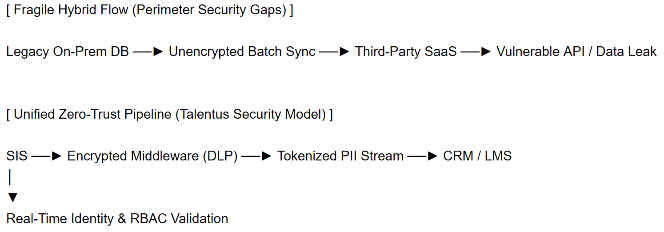
Securing student PII across hybrid cloud environments requires moving beyond perimeter-based defenses. Universities must implement a zero-trust security architecture, automated data loss prevention (DLP), and end-to-end tokenization across every integration point.
The High Vulnerability of Hybrid Campus Networks
Operating distributed campus software on fragmented security models creates critical exposure points across academic and administrative departments:
- Unmonitored Third-Party API Integrations: Custom integrations connecting legacy campus databases to modern cloud tools often lack central authentication, exposing raw student PII in transit.
- FERPA & Regulatory Non-Compliance: Disconnected cloud systems make tracking data lineage nearly impossible, resulting in failed compliance audits and unmonitored access to sensitive records.
- Phishing & Credential Theft: Fragmented login portals across departments increase susceptibility to credential harvesting, allowing malicious actors to move laterally through central campus networks.
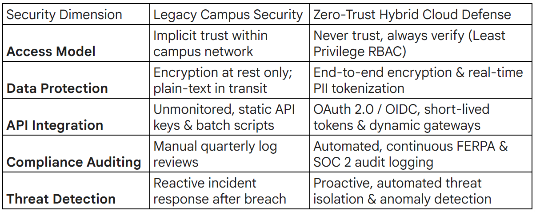
Legacy Perimeter Security vs. Zero-Trust Hybrid Cloud Defense
Modernizing higher education cybersecurity requires embedding security directly into your data integration pipelines:
3 Pillars of Enterprise Higher Ed Cybersecurity
Building a resilient, compliant hybrid cloud security architecture requires three core operational pillars:
1. Zero-Trust Identity & Access Management (IAM)
Enforce granular, Role-Based Access Control (RBAC) and Multi-Factor Authentication (MFA) across every platform. Ensure faculty, staff, and students access only the specific PII necessary for their roles.
2. PII Tokenization & Real-Time Data Loss Prevention (DLP)
Obfuscate sensitive student fields before they travel across cloud boundaries. Implement DLP middleware that automatically scans outbound API payloads for SSNs, credit card numbers, and medical data, tokenizing sensitive fields in real time.
3. Continuous Compliance Auditing & Log Lineage
Maintain cryptographically verified audit trails of every PII access request, data export, and system modification. Automated compliance pipelines provide instant proof of FERPA, HIPAA, and SOC 2 adherence during institutional audits.
Secure Your Hybrid Campus Systems with Talentus Global
Protecting student PII across complex hybrid cloud architectures requires senior EdTech security architects, DevSecOps engineers, and cloud infrastructure specialists.
Talentus Global provides dedicated nearshore LATAM cybersecurity and software engineering pods to harden your university data pipelines.
For over 30 years, Talentus Global has been a trusted technical partner in enterprise software engineering, cloud architecture, and Higher Ed digital transformation. Our nearshore LATAM engineering teams specialize in DevSecOps, zero-trust cloud architecture, API security middleware, and seamless integrations across Thesis Elements, Element451, and custom campus infrastructure.
Operating 100% synchronously in your US timezone (EST/CST), our pre-vetted LATAM engineering pods deploy in as little as 48 hours to secure your cloud workflows without domestic recruitment friction.
- 100% US Timezone Alignment: Collaborate synchronously with senior security engineers during standard EST/CST business hours.
- Deploy in 48 Hours: Bypass hiring bottlenecks and launch specialized DevSecOps pods immediately.
- 95% Developer Retention Rate: Maintain institutional security knowledge and codebase stability across long-term modernization efforts.
Harden your student data pipelines against emerging cyber threats. Check our Ed Tech Connectors here.