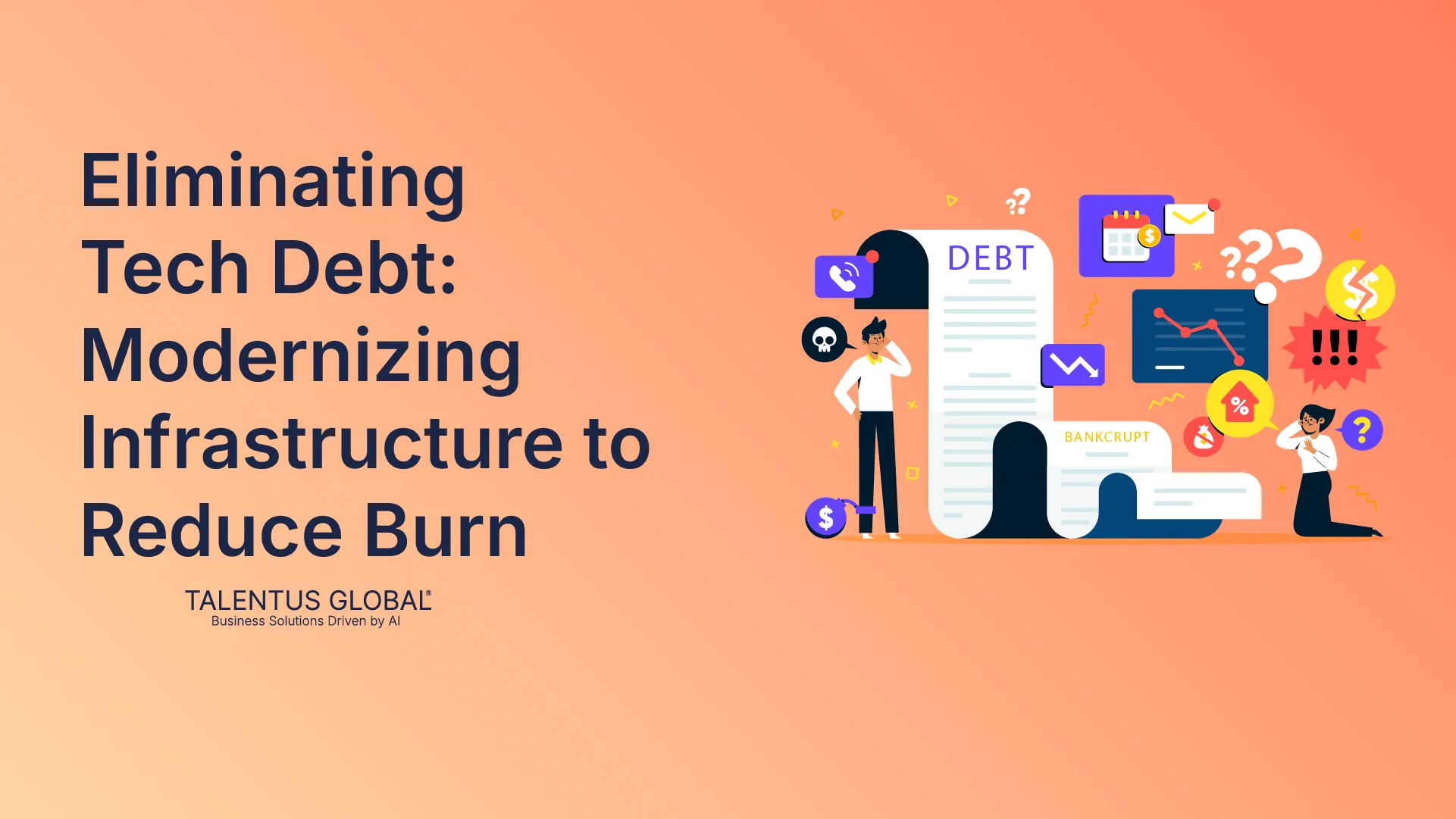
In the technology ecosystem, technical debt is often treated as an abstract engineering problem, a collection of messy code or outdated documentation to be cleaned up "eventually." But for executive leadership, tech debt isn't abstract. It is a direct, measurable financial drain. It represents capital, engineering hours, and operational velocity evaporating into thin air just to keep legacy systems running.
When a university or EdTech platform relies on aging infrastructure, brittle custom integrations, or un-optimized cloud setups, the cost of upkeep scales faster than the organization itself.
In 2026, scaling smarter means treating infrastructure modernization not as a costly IT project, but as a critical capital efficiency strategy. Eliminating technical debt is the fastest way to slash your operational burn rate and redirect resources toward true, value-generating innovation.
1. The Real Cost of Technical Debt
For many organizations, up to 80% of the technology budget is trapped in "keeping the lights on." This high-maintenance operational model creates a severe competitive disadvantage:
The Maintenance Tax: Engineering teams spend their weeks patching server errors and managing database latency instead of shipping new, revenue-driving features.
Cloud Cost Hemorrhaging: Legacy software lifted-and-shifted into the cloud without optimization results in massive, unmanaged cloud bills due to inefficient resource allocation.
The Agility Bottleneck: Brittle, custom-coded middleware means introducing a single new tool or modifying a database schema risks causing cascading system failures.
Debt-Ridden Stack: Legacy Middleware ──> Heavy Maintenance Burn ──> Minimal Innovation Budget
Modernized Stack: Cloud-Native API ──> Automated Infrastructure ──> Maximum Innovation Budget
2. Strategic Pillars to Modernize and Reduce Burn
Eliminating infrastructure debt doesn’t mean rewriting your entire enterprise software stack from scratch. It requires targeted, architectural modernization designed to unlock operational efficiency.
Transitioning to Cloud-Native & Serverless
Legacy architectures require manual server provisioning and constant infrastructure oversight. By refactoring core components into containerized environments (like Kubernetes) or serverless architectures, your infrastructure scales up and down automatically based on real-time traffic. This eliminates the financial burn of paying for idle server capacity during weekends or off-peak cycles.
Decoupling Systems via an API-First Layer
If your Student Information System (SIS), Learning Management System (LMS), and CRM are bound together by custom, hard-coded integrations, your stack is dangerously fragile. Modernization relies on building a decoupled, API-first architecture. By placing a secure API gateway between systems, you can upgrade, swap, or modify individual software layers without jeopardizing the stability of the entire ecosystem.
3. Clearing the Road for Agentic AI
The ultimate operational penalty of technical debt is that it locks organizations out of next-generation technological advances—specifically, Agentic AI.
Autonomous AI agents hold the potential to radically lower operational overhead by automating complex administrative tasks, managing compliance audits, and orchestrating cross-department workflows. However, these systems of intelligence require high-velocity, low-latency, and cleanly architected data pipelines to operate safely.
If your data is trapped in brittle silos or buried under layers of technical debt, an AI agent cannot navigate it efficiently. Modernizing your infrastructure today clears the operational runway required to deploy cognitive capital tomorrow.
The Talentus Velocity: Clearing out years of accumulated technical debt requires deep cloud architecture and engineering expertise that internal teams rarely have the time to execute while managing daily operations. At Talentus Global, we unbottleneck your roadmap by deploying elite, fully managed nearshore software development and automated engineering pods. We specialize in refactoring legacy code, optimizing cloud environments to cut waste, and building the secure, modern foundations required to execute your long-term AI strategy.
Let’s convert your maintenance liability into a lean, scalable growth engine by clicking here